
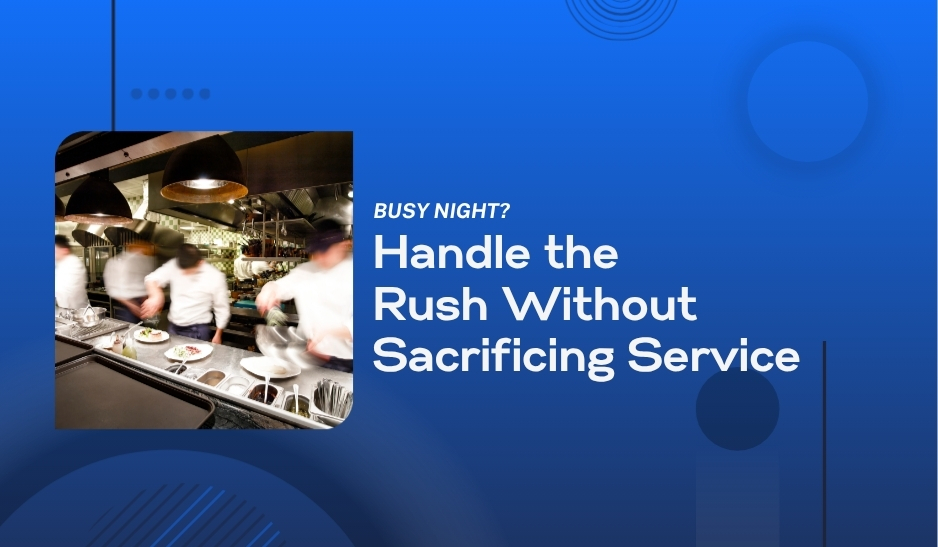
Busy nights are a good problem to have…until they start feeling too busy.
If you've ever looked around your dining room during a rush and thought, "We're drowning tonight", you're not alone. Long wait times, overwhelmed staff, and order mistakes can turn a great night into a stressful one fast.
A busy night doesn't have to mean chaotic service. With the right systems and small operational shifts, you can move faster and deliver a better guest experience.
Let's break it down.
Before we fix the problem, it helps to name it.
During rush periods, most restaurants aren't struggling because of demand, they're struggling because of friction.
Sound familiar?
And here's the key question:
Is the issue really "too many guests"… or too many steps between ordering and service?
Often, it's the second one.
Speed doesn't have to feel rushed. In fact, the best-run restaurants make busy nights feel effortless for the guest.
Here are a few simple shifts that make a big difference:
Reduce back-and-forth communication
Every trip between the table, POS, and kitchen adds time and room for error.
Standardize peak-hour workflows
When everyone knows exactly what to do during a rush, decisions happen faster and smoother.
Prioritize clarity over speed
It's not about rushing orders, it's about making sure the right order gets to the right place the first time.
Keep staff focused on guests, not logistics
The more time your team spends walking orders or fixing mistakes, the less time they spend creating a great guest experience.
This is where operations stop feeling reactive and start feeling controlled.
Modern tools aren't about replacing your team. They're about giving your team the support they need when things get busy.
Let's look at a few game-changers:
What if orders never had to be rewritten or repeated?
With tableside ordering, servers can send orders directly from the table straight to the kitchen. That means:
It's a simple shift that instantly reduces friction during peak hours.
Busy dining room? Bar slammed? Patio full?
Handheld devices keep your team mobile and responsive.
Instead of running back to a stationary POS, staff can:
This results in less chaos and more connection.
One of the biggest frustrations during rush hours is miscommunication between the front and back of the house.
Real-time syncing ensures:
When everyone is working off the same live data, service becomes smoother and more predictable.
Paper tickets can't keep up when the rush hits.
A Kitchen Display System helps organize and prioritize orders visually so the kitchen can:
It's not just about speed, it's about reducing stress behind the line so your team can focus on execution.
Here's something easy to forget during a rush: guests don't just remember how fast they were served, they remember how they felt.
When your systems support your staff, everything changes:
And that's what keeps people coming back.
Busy nights don't have to feel chaotic. The difference comes down to whether your team is constantly catching up or working with systems that keep them ahead.
When workflows are connected, orders move faster, communication stays clear, and staff can stay focused on guests instead of fixing avoidable issues.
The goal is running a rush smoothly, even at peak volume.
Shift4 POS tech helps your team stay aligned when it matters most.
Schedule a Shift4 POS demo to see how your busiest nights can run smoother.
We'll send the guide right over and add you to our weekly value-packed newsletter.